
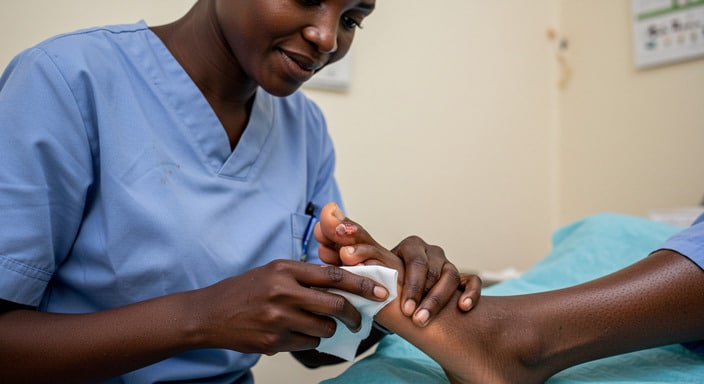

One rainy morning, as I slipped on my socks, a sharp sting shot between my toes, the kind that makes you freeze mid-motion. At first, I brushed it off, thinking it was nothing serious. However, by the time I arrived at work, the itching had become relentless and the skin between my toes felt raw and sore.
When I finally took off my shoes, I saw a red and scaly rash creeping rapidly across my toes. Panic set in; I thought it might be something dangerous. My elder sister, noticing how I couldn’t stop scratching, took one look and laughed. “Ah, that’s Jomi Jomi,” she said. That was the first time I ever heard the name.
In Nigeria, the name Jomi Jomi has become the local slang for that itchy, burning foot rash most people get from sweaty shoes or shared bathrooms.
Medically, it is known as Tinea Pedis or more commonly, Athlete’s Foot (Jomi Jomi). It might sound harmless but if left untreated, Jomi Jomi can spread quickly and make walking painful.
Interestingly, it is entirely treatable. In this article, I will break down what Athlete’s Foot (Jomi Jomi) really is, explore its causes and share three medically proven ways to treat and prevent it effectively.
What is an Athlete’s Foot?
Athlete’s Foot, known locally as Jomi Jomi in many Nigerian communities, is a fungal infection that affects the skin on the feet, most often between the toes. Medically, athlete’s foot is a disease caused by dermatophytes, a group of fungi that thrive in warm, damp environments such as sweaty shoes, tight sneakers or shared bathroom floors.
According to the MSD Manuals, these fungi feed on keratin, the protein found in human skin, nails and hair, leading to the familiar itching, burning and peeling symptoms.
Clinically, Athlete’s Foot (Jomi Jomi) presents with whitish, soggy or cracked skin between the toes, flaky or red patches on the soles and sometimes small, itchy blisters that might have some odour. The NHS notes that while it’s rarely dangerous, untreated infections can spread to the toenails or hands, becoming harder to cure.
In local Nigerian settings, Jomi Jomi is often seen as a “sweat disease,” commonly linked to wearing shoes without socks, using public showers or excessive foot moisture from our hot, humid climate. While some resort to home remedies like applying kerosene or dusting powder, proper medical care or antifungal treatment is key to full recovery and prevention of recurrence.
What Permanently Kills Foot Fungus?
If there is one thing I have learned from dealing with Athlete’s Foot (Jomi Jomi), it’s that getting rid of the fungus isn’t about quick fixes; it’s about discipline. The real cure comes from a twofold strategy: targeted antifungal treatment and uncompromising prevention.
A systematic review published in MDPI confirmed that topical antifungals like terbinafine cream are among the most effective first-line treatments. In one PubMed-cited study, a single application of terbinafine 1% solution achieved full mycological cure in over 70% of participants within six weeks, a remarkable result. I’ve seen firsthand how consistent use of these treatments, combined with basic foot hygiene, can completely reset your skin’s health.
Sadly, fungus is stubborn. If you keep your feet damp, wear tight shoes or skip cleaning your socks and insoles, it will return. Permanent freedom means treating both your feet and your habits, keeping them dry, disinfecting footwear regularly and using antifungal solutions when needed. That is the only proven way to say goodbye to Jomi Jomi for good.
What Are the Causes of JOMI JOMI?
In Nigerian communities, JOMI JOMI, known medically as Athlete’s Foot, is caused by the same fungal agents (dermatophytes) that thrive in warm, moist environments. These fungi feed on keratin, the protein in our skin, making the feet an ideal breeding ground.
- Warm, damp conditions: Prolonged use of tight shoes, sweaty socks or enclosed trainers creates a humid environment perfect for fungal growth. Medical sources like MSD Manuals confirm that once moisture and warmth combine, fungi multiply rapidly.
- Shared or contaminated surfaces: Walking barefoot in communal areas such as bathrooms, changing rooms or around public swimming pools increases risk. Fungal spores can survive for days on damp floors or mats and easily transfer to healthy feet.
- Compromised skin barrier: Tiny cuts, cracked heels or constant sweating (hyperhidrosis) allow fungi to penetrate the skin. TM Magazine notes that poor ventilation, thick socks, and synthetic shoes worsen this by trapping moisture.
Locally, people often link JOMI JOMI to “dirty floors” or “spiritual causes,” but the science is clear: it’s a fungal infection born from heat, sweat and poor hygiene.
In essence, when your feet are warm, wet, and enclosed, you’ve created perfect JOMI JOMI conditions. Prevention starts with keeping them clean, dry, and well-aired.
How to Treat Athlete’s Foot (JOMI JOMI) Permanently
After weeks of battling that stubborn itch between my toes, I finally realised that getting rid of JOMI JOMI isn’t about quick fixes, it’s about strategy.
You need a three-step plan: kill the fungus, stop it from spreading and make sure it never comes back. Once I understood that, recovery was only a matter of consistency.
1. Home Remedy – Dry & Dry Some More
Between the creams and pills, this overlooked step made a massive difference for me. According to Medical News Today, home-remedy methods like using a towel to dry between my toes after bathing can help by removing the moist environment the fungus loves.
Since fungal organisms thrive in warm, damp conditions, drying your feet thoroughly can cut off the fungus’s primary support system.
How to do it:
- Apply a pump or two of a very good foot wash like DermaFIX-IT Purifying Wash on a sponge and wash between your toes thoroughly. Rinse with clean water then dry between your toes thoroughly with a dry towel.
- Spray DermaFIX-IT Foot & Shoe Spray between your toes and also inside your shoes. Allow the shoes to air dry for about 10-20 minutes.
- Apply DermaFIX-IT Rectify Gel on the site. Do this at least once a day.
- Do not forget to soak your feet daily with a foot soak containing Epsom salt. DermaFIX-IT Foot Soak contains Epsom salt and other wonderful actives
2. Over-the-Counter & Prescription Antifungals
When the rash flared up on my soles and between my toes, this was the game-changer. Medical News Today explains that mild cases respond well to over-the-counter (OTC) antifungal creams (like terbinafine, clotrimazole, miconazole), and more severe cases often need oral therapy. Our Rectify gel/cream contains Terbinafine hydrochloride 1%.
Here is what happens when you apply the cream. The topical agents attack the fungal cell membranes at the surface while oral medications reach deep-seated infections in the skin or nails for complete clearance.
So, choose a cream and a spray (terbinafine once daily for 2-4 weeks is typical). For foot or nail-involved infection: always book an appointment with a podiatrist.
3. Keep the Foot Clean and Dry
This was the foundation of my recovery. I learned the hard way that medicine alone isn’t enough. If your feet stay damp, the rash will always return. MSD Manuals emphasise that lasting recovery depends on hygiene and moisture control.
Fungi thrive in warm, enclosed environments and spread easily through shared surfaces, so breaking that cycle is critical. So, to treat it permanently,
- Wash your feet daily with soap and warm water, then thoroughly dry between your toes.
- Change socks every day (or twice if you sweat heavily), rotate shoes and avoid sharing towels or footwear.
- Wear breathable shoes and never go barefoot in communal showers or on damp floors.
- Spray antifungal solutions inside shoes to absorb sweat and kill residual spores.
Once I made this routine non-negotiable, the infection stopped returning because the fungus finally ran out of places to live.
See a podiatrist in Lagos or a Foot specialist
For persistent or recurring cases, book an appointment through the Flawless Esthetics Clinic website. Their foot care specialists offer personalised treatment, shoe-hygiene guidance and clinical options that ensure JOMI JOMI stays gone for good.
How to Prevent Athlete’s Foot (Jomi Jomi)
Preventing Athlete’s Foot (JOMI JOMI) begins long before symptoms appear and trust me, you don’t want to experience that maddening itch, sting and peeling between your toes to learn the lesson.
The discomfort is more than skin-deep; it burns, disrupts sleep and can spread quickly if ignored. Interestingly, prevention is straightforward and completely within your control.
If you’ve never had Athlete’s Foot, your goal is to stop fungal spores from ever taking hold. Fungi thrive in warmth, moisture and darkness, the exact environment inside tight, sweaty shoes. Follow these simple habits to stay fungus-free:
- Wash daily with soap and warm water, then dry thoroughly, especially between toes.
- Wear shoes made of leather or mesh and moisture-wicking socks that pull sweat away from the skin.
- Never wear the same pair two days in a row. Give each pair 24 hours to air out.
- Always wear flip-flops or sandals in communal showers, locker rooms, and pools.
- Avoid sharing towels, socks or shoes even with family members.
How to Prevent the Infection from Recurring
Stopping the infection is only half the job, keeping it from coming back is what ensures long-term relief.
- Even after symptoms fade, apply topical antifungal cream for at least 7–10 days more to kill lingering spores.
- Spray shoes with antifungal disinfectant and wash socks in hot water, particularly after workouts or long hours in enclosed shoes.
- Long nails trap moisture and spores, providing a breeding ground for fungi.
- Mild itching, redness or peeling means it’s time to restart treatment before it spreads.
FAQs
How long does it take for Athlete’s Foot (JOMI JOMI) to clear?
It takes 2-4 weeks for mild cases to resolve; complete resolution often takes over 4 weeks. Severe or nail-involved cases may take months.
Can you catch Athlete’s Foot from someone else?
Yes. Exposure to infected skin, showers or surfaces can transmit the fungi.
Is it true I’ll get Athlete’s Foot only if I’m an athlete?
No. Despite the name, anyone can get it, especially those with sweaty feet, poor ventilation in shoes or communal shower exposure.
Should I see a doctor or a clinic?
Yes, if the rash is severe, spreading, resistant to OTC creams or if you have diabetes or compromised immune system. Early specialist help prevents complications.
How can I stop it from coming back?
Keep feet dry, alternate shoes, wash socks daily, wear breathable footwear, use antifungal OTC products like AthletiCURE Kit and avoid sharing towels or socks.
Conclusion
Athlete’s Foot or “JOMI JOMI” as many of us call it, may start as a harmless itch but ignore it and it quickly becomes the guest that refuses to leave. The truth is, treating it isn’t complicated; it’s about consistency. Wash, dry, treat, repeat. Keep your feet dry, your shoes clean and your socks fresh; that’s the real cure.
From my own experience, once I understood that fungus thrives on neglect and moisture, everything changed. A bit of discipline turned into lasting comfort. And if you’ve tried everything yet the rash keeps circling back, that’s your cue to seek expert help.
The specialists at Flawless Esthetics Clinic don’t just treat the infection; they help you understand your feet and protect them for good. Healthy feet are not a luxury; they are your foundation.


